
August 5, 2026
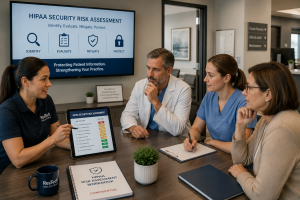 A HIPAA Security Risk Assessment is one of the most important activities healthcare organizations perform to protect electronic protected health information (ePHI) and identify security vulnerabilities before they become costly problems.
Yet one of the most common questions medical practices ask is, "How often do we actually need to perform one?"
The short answer is that there is no specific HIPAA requirement stating that a Security Risk Assessment must be completed annually. Instead, healthcare organizations are expected to conduct an ongoing risk analysis process and review their security posture whenever significant changes occur to their technology environment, operations, or identified risks.
For many healthcare practices, performing a comprehensive Security Risk Assessment at least once each year, along with additional reviews after major technology or business changes, is considered a practical best practice.
What Is a HIPAA Security Risk Assessment?
A HIPAA Security Risk Assessment is a structured evaluation of the administrative, physical, and technical safeguards used to protect electronic protected health information (ePHI).
The goal is to identify:
- Potential security threats
- System vulnerabilities
- Areas of non-compliance
- Risks to patient information
- Opportunities to strengthen security
Unlike a vulnerability scan or penetration test, a HIPAA Security Risk Assessment looks at the overall security program, including technology, policies, procedures, and operational practices.
Why Security Risk Assessments Matter
Healthcare organizations continue to face increasing cybersecurity threats, including ransomware, phishing attacks, insider threats, and accidental data exposure.
A Security Risk Assessment helps organizations:
- Understand where sensitive information is stored.
- Identify security weaknesses.
- Prioritize improvements.
- Support HIPAA compliance efforts.
- Improve business continuity.
- Reduce the likelihood of costly security incidents.
Rather than reacting after an incident occurs, organizations can proactively address risks before they become larger problems.
A 5-Step Framework for Reviewing Your Security Risks
Healthcare organizations should think of risk assessments as part of a continuous improvement process rather than a one-time project.
Step 1: Identify Where ePHI Exists
Begin by understanding where electronic protected health information is created, received, stored, and transmitted.
Examples include:
- Electronic Health Records (EHR)
- Practice management software
- Microsoft 365
- Cloud applications
- Backup systems
- Mobile devices
- File servers
- Connected medical devices
You cannot adequately protect information if you don't know where it resides.
Step 2: Evaluate Potential Risks
Next, identify the threats that could affect your environment.
Examples include:
- Phishing attacks
- Ransomware
- Lost laptops
- Unauthorized access
- Weak passwords
- Hardware failures
- Natural disasters
- Vendor-related risks
Not every risk carries the same level of likelihood or impact.
Step 3: Review Existing Safeguards
Determine which security controls are already in place.
Examples include:
- Multi-Factor Authentication
- Endpoint protection
- Device encryption
- Secure backups
- Email security
- Firewall management
- Access controls
- Employee security training
This step helps identify gaps that may require additional attention.
Step 4: Prioritize Improvements
Not every issue needs immediate remediation.
Organizations should evaluate:
- Likelihood
- Potential impact
- Cost
- Operational considerations
- Available resources
Addressing the highest-risk items first often provides the greatest security improvement.
Step 5: Document and Repeat
Risk assessments should never become a document that sits on a shelf.
Instead:
- Document findings.
- Track remediation efforts.
- Review progress.
- Update assessments after significant changes.
- Repeat the process regularly.
Security is an ongoing process rather than a one-time event.
When Should a New Security Risk Assessment Be Performed?
While many healthcare organizations complete a comprehensive assessment annually, additional reviews should be considered after significant events such as:
- Opening a new office
- Implementing a new Electronic Health Record (EHR) system
- Migrating to Microsoft 365
- Deploying new servers or network infrastructure
- Experiencing a cybersecurity incident
- Merging with another organization
- Expanding to multiple locations
- Making major changes to security policies
Any significant change that affects how ePHI is stored, accessed, or protected may warrant a new review.
Common Mistakes Healthcare Practices Make
Many organizations reduce the effectiveness of their Security Risk Assessments by:
- Treating them as a compliance checklist.
- Performing them only when required by another organization.
- Failing to document remediation efforts.
- Ignoring previously identified risks.
- Not updating assessments after major technology changes.
- Assuming their managed IT provider performs the assessment automatically.
An assessment only creates value when its findings lead to meaningful improvements.
Questions to Ask Your IT Provider
If your managed IT provider assists with HIPAA security, consider asking:
How do you support our Security Risk Assessment process?
Understand whether they assist with technical documentation, remediation planning, or coordination with compliance professionals.
Which identified risks have already been addressed?
Review progress regularly rather than waiting until the next assessment.
How do you prioritize remediation?
Not every recommendation carries the same level of urgency.
How are technology changes documented?
Keeping accurate records makes future assessments more effective.
How do you help us monitor new risks throughout the year?
Security should be reviewed continuously rather than only during scheduled assessments.
Frequently Asked Questions
Does HIPAA require a Security Risk Assessment every year?
HIPAA requires covered entities to perform an ongoing risk analysis process but does not specify an annual schedule. Many healthcare organizations conduct comprehensive assessments annually as a practical best practice while also reviewing risks after significant operational or technology changes.
Is a vulnerability scan the same as a Security Risk Assessment?
No.
A vulnerability scan identifies technical weaknesses in systems, while a HIPAA Security Risk Assessment evaluates broader administrative, physical, and technical safeguards.
Does hiring a managed IT provider satisfy this requirement?
No.
A managed IT provider may support the process, but your healthcare organization remains responsible for its HIPAA compliance obligations.
Who should participate in a Security Risk Assessment?
The assessment often involves organizational leadership, IT personnel, compliance professionals, and other stakeholders who understand how electronic protected health information is managed throughout the practice.
Final Thoughts
A HIPAA Security Risk Assessment should not be viewed as an annual paperwork exercise.
It is an ongoing process that helps healthcare organizations identify vulnerabilities, strengthen safeguards, and make informed decisions about protecting patient information.
By reviewing risks regularly, documenting improvements, and reassessing your environment after significant changes, your practice can build a stronger security program while supporting its long-term HIPAA compliance efforts.
About ResTech Solutions
ResTech Solutions helps healthcare organizations throughout the Houston area strengthen their security through proactive managed IT services, cybersecurity consulting, and compliance-focused technology guidance.
We work alongside healthcare practices to identify security risks, implement practical safeguards, and support ongoing technology improvements that help protect patient information and reduce operational risk.
If you'd like to better understand your organization's security posture or prepare for your next HIPAA Security Risk Assessment, schedule a no-obligation discovery call with ResTech Solutions. We'll review your current environment, answer your questions, and help you identify practical opportunities to strengthen your cybersecurity and compliance program.